South Korea Network Automation Market 2026: Why AI-RAN and Autonomous Networks Are Accelerating
South Korea has spent years building one of the world’s most advanced telecom infrastructures. In 2026, however, the next competition is no longer simply about faster 5G or broader coverage.
The focus is shifting toward networks that can increasingly understand their own state, optimize resources, and act with less human intervention.
That shift is visible across the country’s telecom sector. SK Telecom is building an AI-RAN pilot network under a government-backed Hyper-AI Network initiative, while KT is developing AI-based autonomous operations for industrial environments. LG Uplus is already applying AI agents and digital twins to live network operations and has set a goal of moving toward a more autonomous network by 2028. (SK텔레콤 뉴스룸)
This is why the South Korea network automation market is becoming more interesting than a simple telecom software category. It now sits at the intersection of software-defined networking, AI infrastructure, edge computing, 6G, AI data centers and physical AI.
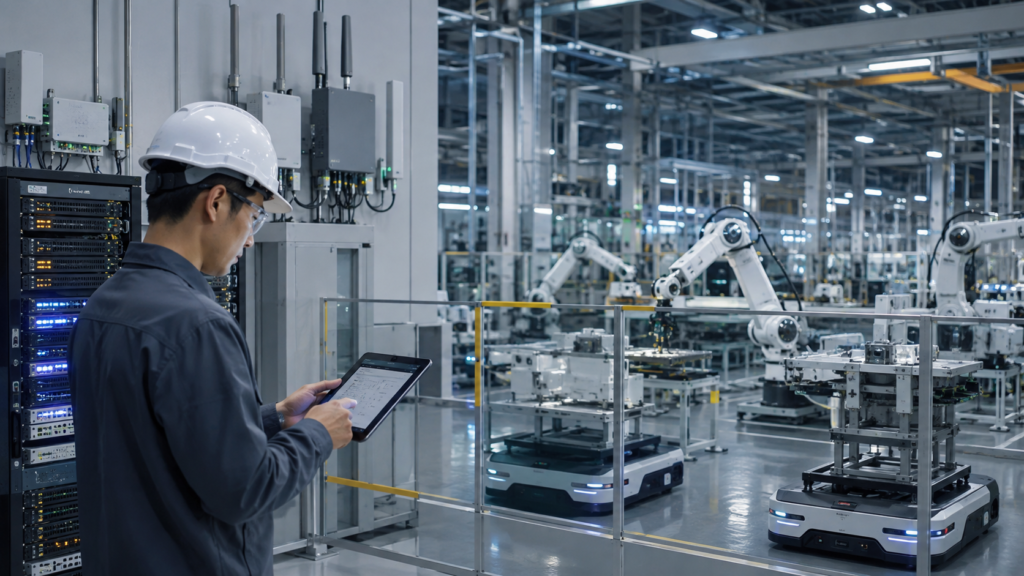
From SDN to Networks That Can Make Decisions
Software-defined networking changed telecom by separating network control from underlying hardware and making infrastructure more programmable.
That was an important first step.
But programmability is not the same as autonomy.
In a traditional SDN environment, people still define policies, configure rules and decide how the network should respond. The new direction is different. AI is beginning to analyze traffic, predict failures, optimize radio resources and, in some cases, trigger corrective actions automatically.
LG Uplus offers one of the clearest examples. The company has applied AI agents and digital twins across network operations including fault management, overload control, radio optimization and facility management. It says the use of autonomous technologies contributed to a 70% reduction in mobile customer quality complaints. (LG유플러스 뉴스룸)
SK Telecom is taking a similar direction but with a stronger emphasis on standardization. In June, the company said it aims to reach TM Forum Autonomous Network Level 4 and identified four priorities: redesigning operational processes, building a data ontology, modernizing OSS and standardizing AI agents. (SK텔레콤 뉴스룸)
That detail matters.
The next stage of network automation is not simply “adding AI” to existing operations. It requires common data structures, interoperable systems and a way for AI agents to understand what different network elements mean and how they relate to one another.
In other words, the software-defined networking market is evolving into something broader: software-defined infrastructure that can increasingly interpret and act on its own operating conditions.
AI-RAN Is Becoming the Bridge Between Telecom and Physical AI
AI-RAN is one of the most important parts of this transition.
The term is sometimes described too narrowly as “AI applied to radio networks.” That misses the larger opportunity.
AI-RAN combines radio access infrastructure with AI workloads so the network can both optimize communications and support AI services closer to where data is generated.
SK Telecom demonstrated an AI-RAN test network in February and later began building a pilot network as part of the government-led Hyper-AI Network program. The project is designed to validate low-latency, high-reliability connectivity for physical AI applications in environments such as manufacturing and shipbuilding. (SK텔레콤 뉴스룸)
KT is participating in the same national project, focusing on autonomous network operations and stable communications for multiple robots in industrial sites. The two consortia are backed by a combined 17.206 billion won investment over two years. (Seoul Economic Daily)
LG Uplus is also testing how commercial 5G networks can interact with AI-RAN environments. In August, the company and Yonsei University verified technology that allows devices to switch automatically between a commercial 5G network and an AI-RAN test network while maintaining service continuity. (LG유플러스 뉴스룸)
This is where AI-RAN becomes more than another telecom upgrade.
Robots, drones and other physical AI systems need fast connectivity, but they also need computation, inference and network coordination. If part of that workload can be handled inside the network, devices do not need to carry every computing requirement themselves.
That changes the role of telecom infrastructure.
The network stops being just the pipe that carries AI traffic. It starts becoming part of the AI infrastructure itself.
That may be one of the most important reasons the South Korea network automation market is expanding beyond conventional SDN.

Network Automation Is Becoming an AI Infrastructure Market
The same trend is visible in data centers and cloud infrastructure.
As AI workloads grow, telecom operators are investing not only in network intelligence but also in AI data centers, GPU infrastructure and cloud-native systems.
SK Telecom’s AI Data Center revenue reached 519.9 billion won in 2025, up 34.9% year over year. The company also said it plans to apply AI-driven automation across network design, deployment and operations in 2026. (SK텔레콤)
That expansion continued this week. SK Telecom is creating a separate AI data center company, SK Horizon, with 3.08 trillion won in equity investment from KKR and Korean investors. The company will focus on operating and expanding existing infrastructure, while another unit, SK Hyper, is being developed for new AI data center projects. (The Wall Street Journal)
These investments show why categories such as the South Korea cloud AI market, edge AI hardware market, software-defined infrastructure market and automated infrastructure management market are beginning to overlap.
The old model separated them neatly:
network teams managed telecom infrastructure, cloud teams managed compute, and AI teams built models.
That separation is becoming harder to maintain.
AI applications increasingly depend on the entire chain:
AI data centers → cloud and edge compute → programmable networks → autonomous operations → physical AI services
For telecom operators, this means network automation is becoming part of a larger infrastructure strategy rather than a standalone operations project.
For vendors, it also changes where value is created. A monitoring tool that only reports faults is less valuable than a platform that can connect topology, traffic, resource usage, alarms, AI models and automated actions into one operational loop.
This is where concepts such as self-healing networks become more practical.
The goal is not simply to detect a problem faster. It is to move toward systems that can identify anomalies, understand likely causes, choose an appropriate response and verify whether the action actually fixed the issue.
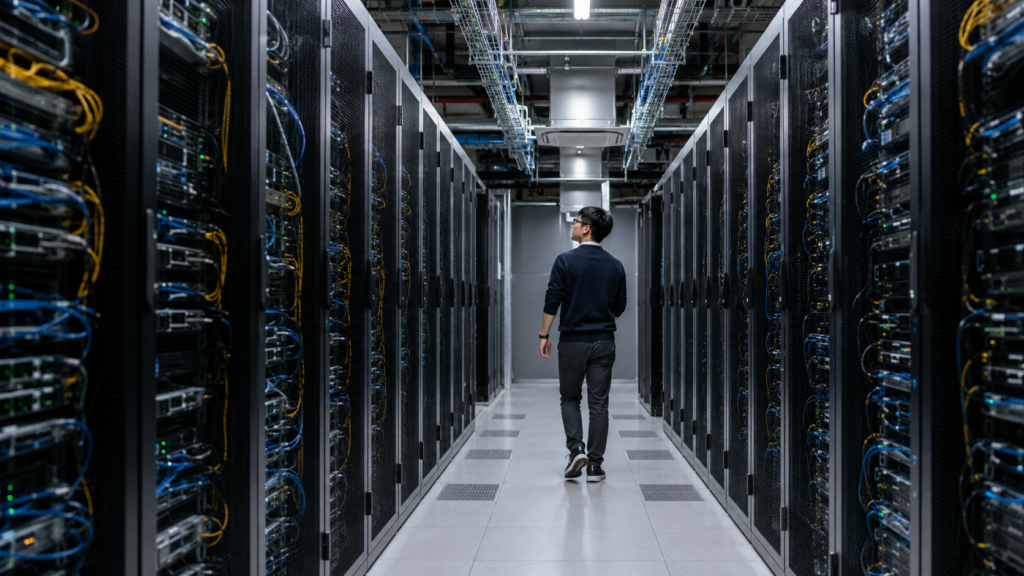
Why South Korea Is an Important Market to Watch
South Korea has several advantages that make this transition particularly visible.
The country already has dense 5G infrastructure, large telecom operators with significant R&D capabilities, strong semiconductor and hardware ecosystems, and direct government support for AI infrastructure.
At MWC 2026, the three major Korean telecom operators already showed how differently they are approaching the same shift. SK Telecom emphasized AI infrastructure, AI data centers and AI-RAN. KT focused on enterprise AI platforms and agentic systems, while LG Uplus highlighted autonomous networks and customer-facing AI services. (Korea)
Despite those differences, the direction is similar.
Telecom networks are becoming more software-defined, more cloud-native and more dependent on AI.
The next phase is to make those networks increasingly autonomous.
There are still major constraints. AI-based network operations need reliable data, consistent standards, strong security and clear limits on what automated systems are allowed to change. SK Telecom’s decision to build around TM Forum standards reflects how difficult it is to scale autonomous operations when every vendor and system uses a different structure. (SK텔레콤 뉴스룸)
But the market direction is becoming easier to see.
The South Korea network automation market is moving from manual operations to automation, from automation to intelligence, and from intelligence toward autonomy.
AI-RAN, digital twins, AI agents and autonomous OSS are not separate trends. They are different pieces of the same transition.
And that may be the most important point for 2026.
South Korea is no longer just building faster networks.
It is beginning to build networks that can increasingly observe, decide and act for themselves.