Black Bag Review: Two Reasons This Spy Thriller Is Worth Watching
Netflix has been surprisingly good at resurfacing movies that deserved more attention the first time around. Not just Netflix originals, but also theatrical releases that slipped past a lot of viewers and later found a second life on streaming.
Black Bag is one of those movies.
Steven Soderbergh’s 2025 spy thriller has recently climbed to the top of Netflix’s movie rankings in South Korea, and it is easy to see why. It is compact, stylish, and built around a familiar genre without feeling completely familiar. More than anything, it has two strengths that kept me engaged from beginning to end.
Before getting to those, it helps to know a little about how the movie was made.
What Is Black Bag About?
Black Bag is a 2025 spy thriller directed by Steven Soderbergh and written by David Koepp. Michael Fassbender and Cate Blanchett lead the cast, with Regé-Jean Page, Naomie Harris, Tom Burke, Marisa Abela, and Pierce Brosnan in supporting roles. Focus Features released the film theatrically in March 2025. (Focus Features)
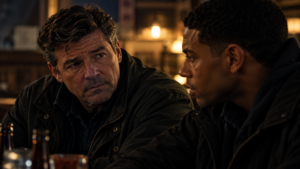
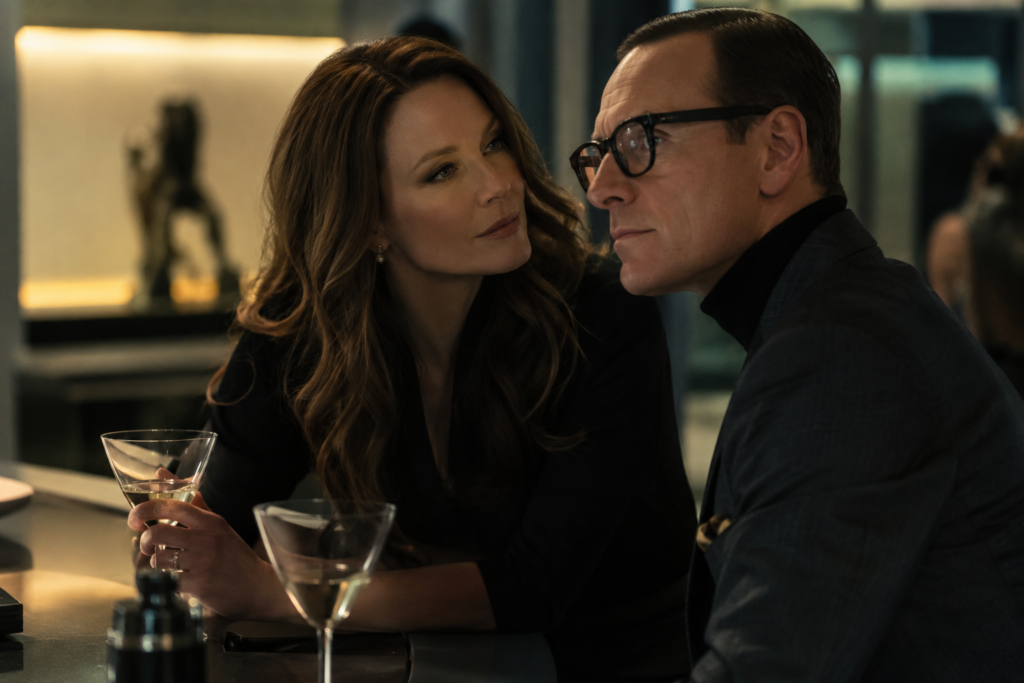
The story follows British intelligence officer George Woodhouse, played by Fassbender, who is asked to identify a mole inside the intelligence community. The problem is that one of the suspects is his wife, Kathryn, played by Blanchett. She is an intelligence officer herself, which immediately turns the investigation into something more personal than a standard hunt for an internal traitor. (Focus Features)
The screenplay did not come from a novel or an existing franchise. Koepp developed it from an idea he had been carrying for decades. While working on the original Mission: Impossible in the 1990s, he spoke with CIA personnel and became interested in something less glamorous than spycraft itself: how people whose jobs depend on secrecy manage marriage and intimacy at home. That question stayed with him for years and eventually became the foundation of Black Bag. (Focus Features)
The title also reflects that relationship. George and Kathryn use “black bag” as a kind of shorthand when one of them cannot discuss classified work with the other. In the movie, it functions less as formal intelligence jargon and more as an understanding between the two of them: this is something I cannot tell you, so do not ask further.
That is what separates the film from a more conventional spy thriller. The central issue is not only whether there is a traitor inside the agency, but how much trust can survive between two people whose professions require them to keep secrets from each other.
From that basic setup, Black Bag develops two strengths particularly well.
First: The Spy Story Feels Familiar, but the Structure Does Not
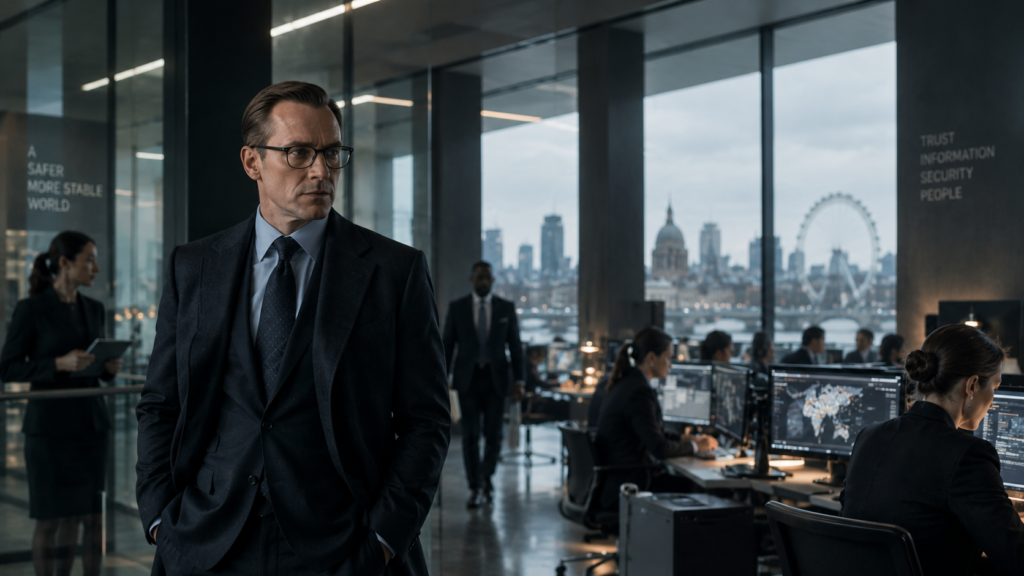
Spy thrillers usually rely on a recognizable pattern. Classified information is compromised, someone inside the organization is working against it, the protagonist has to identify the traitor, and a late reveal changes what we thought we knew.
Black Bag uses much of that framework.
George has to investigate a group of suspects, and Kathryn is among them. She is not merely his wife but an experienced intelligence officer in her own right, so George is effectively testing his loyalty to his country and his trust in the person closest to him at the same time.
That one choice gives the movie much of its tension.
The investigation and the marriage are never completely separate. When George questions someone, there is often more at stake than collecting information. When Kathryn says something, the audience has to decide whether she is speaking as a wife, an operative, or both.
That is why conversation matters more here than action.
One of the movie’s strongest sequences is the dinner scene, where several of the suspects sit around the same table. George watches what people say, what they avoid saying, and how they react when certain information is introduced. There is very little traditional action in the scene, but it still carries a lot of pressure because every line can potentially reveal something.
The movie does this repeatedly. A detail that appears unimportant early on can take on a different meaning later, while a seemingly straightforward exchange can become suspicious once new information appears. The plot itself is not especially difficult to follow, but you do have to pay attention.
Without giving anything away, the pleasure of Black Bag is not simply figuring out who the enemy is. The film keeps asking a more interesting question: how much of what these people say can actually be trusted?
That emphasis on trust and relationships, rather than action alone, is the first reason the movie worked for me.

Second: There Is Almost No Weak Link in the Cast
The second strength is the cast.
Fassbender and Blanchett are an obvious place to start. George is emotionally restrained and constantly observing the people around him, and Fassbender plays him with exactly that kind of controlled detachment. Blanchett gives Kathryn a different kind of energy. She can appear relaxed and completely self-assured while still making it difficult to know what she is thinking.
That uncertainty matters because the entire movie depends on whether we believe the relationship between them.
The supporting cast is just as important. Regé-Jean Page, Naomie Harris, Tom Burke, and Marisa Abela all play characters who fall under suspicion, and each brings a different temperament to the group. Because their personalities are distinct, the film can shift suspicion from one person to another without the cast becoming difficult to follow.
Pierce Brosnan was probably the most enjoyable surprise for me.
Seeing a former James Bond actor turn up in another British intelligence story naturally draws attention, but the casting is more than a joke or a reference. He does not have the largest role, yet he brings exactly the kind of authority the part needs. Even in relatively short scenes, he fits the tone of the film immediately.
That is probably the best way to describe the casting as a whole. It is not just a collection of famous names. The actors feel suited to the people they are playing, and there was no point where I found myself wishing a character had been handled differently.
For a movie built so heavily around suspicion and dialogue, that matters a lot.
So, Is Black Bag Worth Watching?
Yes, especially if you like spy thrillers that rely more on conversation and psychology than constant action.
Black Bag is not trying to compete with Mission: Impossible in terms of chases, explosions, or large-scale set pieces. Most of its tension comes from people sitting across from one another, watching reactions, withholding information, and deciding whom they can trust.
That also makes it easy to recommend if you want something focused but not exhausting. The film runs about 95 minutes, so it never feels bloated, and the story remains relatively easy to follow even while it keeps shifting suspicion from one character to another. (Apple TV)
I also think it benefits from being watched without knowing too much beforehand. The setup is enough: a counterintelligence officer has to investigate several possible traitors, and one of them is his wife.
From there, the movie is better when you discover the rest for yourself.
If you enjoy spy stories, dialogue-heavy thrillers, or movies where the tension comes from wondering who is lying rather than who is holding the bigger gun, Black Bag is easy to recommend.
For me, its appeal came down to two things: a familiar spy story told from a less familiar angle, and a cast with almost no weak spots.