Will Soccer Finally Go Mainstream in America After the 2026 World Cup
Will Soccer Finally Go Mainstream in America After the 2026 World Cup?
The 2026 FIFA World Cup gave soccer in the United States something it had been waiting for: a truly national moment.
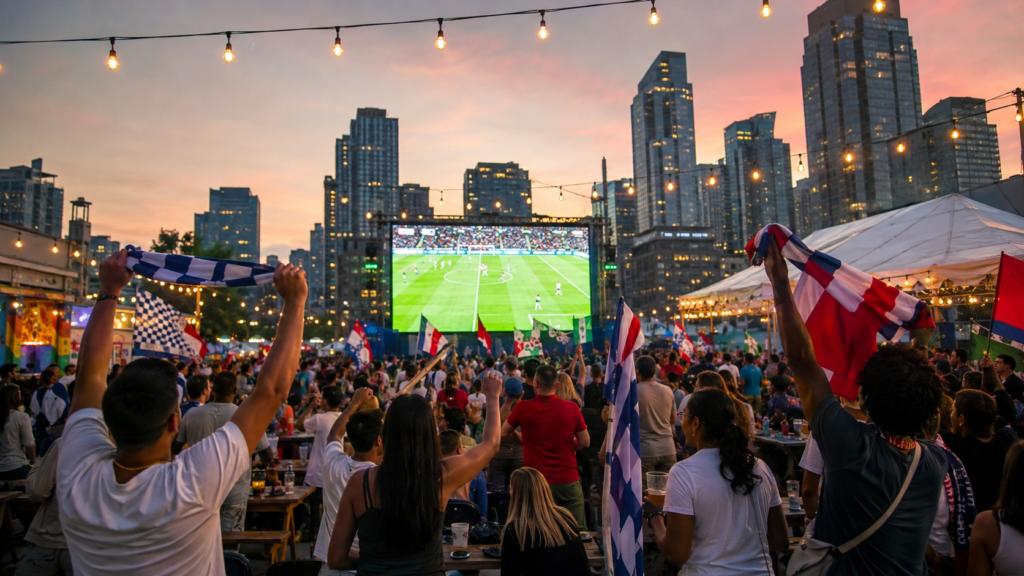
For 39 days, the tournament spread across North America, bringing 104 matches to 16 host cities. More than 6.8 million spectators attended games, while over 9 million people visited official FIFA Fan Festivals across Canada, Mexico, and the United States. Those festivals combined live match screenings with music, food, performances, merchandise, and local cultural programming. The World Cup was not confined to stadiums. It became a citywide cultural event. FIFA’s official tournament figures and Fan Festival report show just how large that experience became. (Grassroots)
The bigger question begins now.
Will the excitement created by the World Cup turn soccer into a lasting part of mainstream American sports culture, or will interest fade once the tournament is over?
The World Cup Expanded the Way Americans Experience Soccer
Soccer was already growing in the United States before the 2026 World Cup.
According to Nielsen’s analysis of the U.S. soccer market, the country entered the tournament with more than 62 million soccer fans, giving it one of the largest soccer audiences in the world. Nielsen also found that American soccer fandom is not centered on a single competition. Supporters follow a mix of Major League Soccer, Liga MX, the Premier League, the UEFA Champions League, the NWSL, and international tournaments. (Nielsen)
The World Cup added something those leagues cannot easily reproduce: a shared national experience.
People who rarely watched soccer joined office pools, attended public viewing parties, followed national teams, and learned the stories behind unfamiliar players. Fans without match tickets could still participate through festivals, concerts, food events, and community programs.
The official FIFA Fan Festivals attracted more than 9 million visitors across 13 cities and featured over 873 musical acts and live performances. This matters because it shows that soccer was consumed not only as a competition but also as entertainment, social connection, and urban culture. FIFA described the festivals as places where football, music, food, local identity, and shared experiences came together.
That broader experience lowered the barrier to entry. A person did not need to understand tactics, league structures, or player histories to enjoy the event. They could begin with the atmosphere and gradually become interested in the sport itself.
A Major Event Can Create Attention, but Not Automatically Build a Fan Base
Large sporting events are effective at generating temporary attention. Maintaining that attention is much harder.
The United States has experienced this before. The 1994 World Cup helped create the conditions for Major League Soccer, which began play two years later. The tournament produced a structural legacy: a domestic professional league and a stronger platform for the sport.
The 2026 World Cup has a different challenge. The United States already has professional leagues, modern stadiums, youth programs, streaming coverage, and global soccer audiences. The issue is no longer whether soccer has a foundation. It is whether millions of occasional viewers will become regular fans.
That transition requires several steps:
- World Cup viewers must continue watching club soccer.
- Families must have affordable opportunities to attend matches.
- New fans need clear access to broadcasts and streaming platforms.
- Local clubs must build stronger relationships with their communities.
- Interest in the men’s World Cup must extend to women’s soccer, youth soccer, and grassroots participation.
U.S. Soccer has already framed the tournament as a long-term participation opportunity through its Soccer Forward initiative. The program focuses on expanding access in schools and communities, supporting local leaders, and creating more inclusive places to play. (U.S. Soccer)
This may prove more important than attendance records. A World Cup can create curiosity, but local programs determine whether that curiosity becomes a habit.
America’s Diverse Soccer Audience Is Its Greatest Advantage
Soccer fandom in the United States does not look like fandom in most other countries.
American supporters often follow several teams, leagues, and national identities at the same time. A fan may support the U.S. national team, watch Liga MX with family members, follow an English Premier League club, and attend a local MLS or NWSL match.
This is not a weakness. It is one of the market’s greatest strengths.
Nielsen reported that Liga MX was the most-watched soccer league on U.S. television in 2025, ahead of several major European and domestic competitions. That reflects the importance of Hispanic audiences, but the diversity of U.S. soccer goes much further. Immigrant communities, international students, younger digital audiences, and multicultural families all bring different traditions into the same sports market. (Nielsen)
The World Cup made those communities more visible. Host cities presented soccer through local food, music, public celebrations, supporter groups, and cultural performances. Instead of asking fans to adopt one standardized version of American soccer culture, the tournament allowed multiple soccer cultures to coexist.
That is likely to remain central to the sport’s future in the United States.
Soccer may grow not because Americans abandon their existing sports traditions, but because the game provides a place where different identities and communities can participate together.
Soccer Does Not Need to Replace the NFL or NBA
Discussions about soccer in America often return to the same question:
Can soccer overtake the NFL, NBA, MLB, or NHL?
That may be the wrong standard.
A sport does not need to become the most popular league in the country to become mainstream. It needs a stable audience, recognizable stars, meaningful local communities, reliable media distribution, and enough cultural relevance to remain part of everyday conversation.
Soccer already occupies several different positions in the U.S. market:
- The World Cup creates mass national attention.
- European leagues provide elite weekly competition.
- Liga MX connects strongly with Hispanic audiences.
- MLS develops regional club identities.
- The NWSL and the U.S. women’s national team strengthen the women’s game.
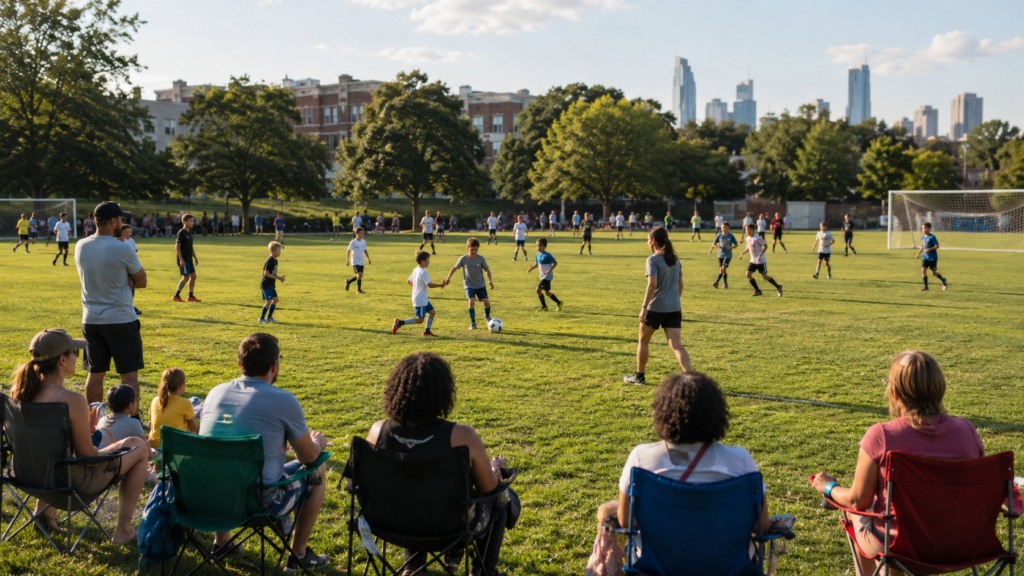
- Youth and amateur soccer create direct participation.
These layers do not always compete with one another. In many cases, they reinforce each other.
A supporter may discover the sport through a World Cup match, begin following an international star, attend an MLS game, and later join a local recreational league. The path into fandom is no longer linear.
Soccer’s future in America may therefore depend less on defeating another sport in the ratings and more on becoming an activity people watch, play, discuss, and share throughout the year.
Participation Will Be the Most Important Measure of the World Cup’s Legacy
Television audiences and stadium attendance provide immediate evidence of interest. Participation reveals whether that interest has deeper roots.
Before the tournament, U.S. Soccer projected that World Cup momentum could significantly increase both national fandom and participation. Its long-term strategy connects the 2026 men’s tournament with the 2028 Los Angeles Olympics and the possibility of a future Women’s World Cup in the United States. U.S. Soccer’s legacy initiative emphasizes schools, community programs, physical and mental well-being, and wider access to the sport. (U.S. Soccer)
However, participation remains affected by a familiar American problem: cost.
Youth soccer can require club fees, travel expenses, equipment, and access to suitable facilities. In many communities, the sport is easy to discover but expensive to pursue at a competitive level.
If the United States wants to turn World Cup enthusiasm into long-term growth, soccer must become easier to play. That means investing in public fields, school programs, affordable local leagues, qualified coaches, and community-based competitions.
The strongest legacy would not be another attendance record. It would be a generation of children and adults who gained a realistic opportunity to participate because the tournament took place.
MLS and the NWSL Now Have a Critical Opportunity
The months after the World Cup will be especially important for domestic soccer.
Major League Soccer and the National Women’s Soccer League have an opportunity to convert international-tournament viewers into regular club supporters. They can do this by making the connection between the World Cup and domestic leagues easier to understand.
New fans need recognizable narratives. They need to know which World Cup players compete locally, which clubs represent their region, where matches can be watched, and why upcoming fixtures matter.
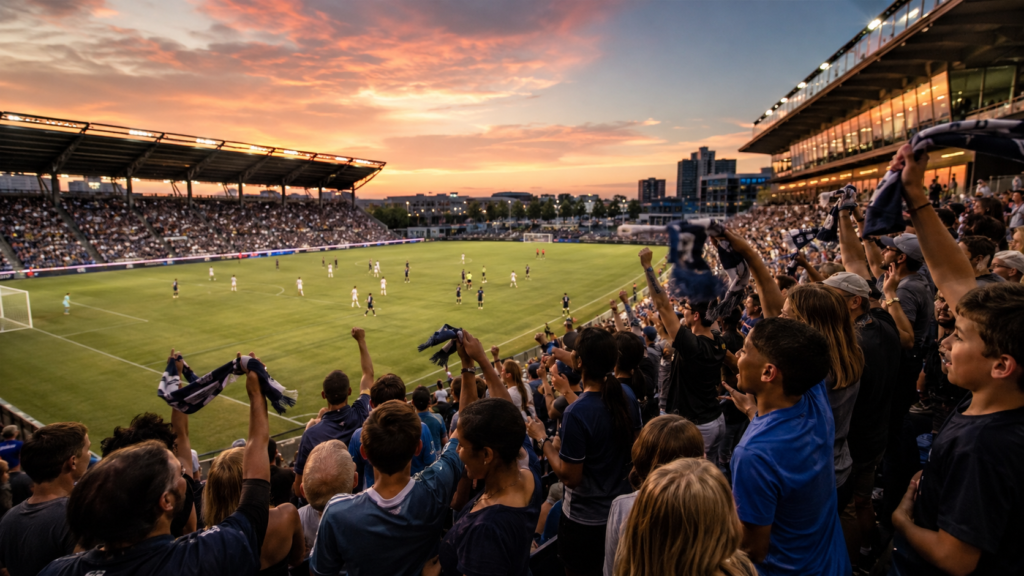
The leagues also need to preserve the communal atmosphere that made the World Cup attractive. Watch parties, supporter sections, local food, music, family programming, and accessible public events can make domestic matches feel like cultural gatherings rather than isolated sporting products.
This is particularly important because the World Cup demonstrated that many people were drawn to the social experience before they were drawn to the technical details of the game.
For domestic leagues, the lesson is clear: the match is the center of the product, but it is not the entire product.
The Real Test Begins After the Final Whistle
The 2026 FIFA World Cup proved that soccer can command enormous attention in the United States.
More than 6.8 million people attended matches, over 9 million visited FIFA Fan Festivals, and the tournament reached communities far beyond the stadiums. It brought soccer into workplaces, parks, bars, schools, city centers, and family conversations. (Grassroots)
But a successful tournament and a lasting soccer culture are not the same thing.
The real test is whether first-time viewers continue watching. It is whether families attend local matches, whether children gain better access to the sport, and whether domestic clubs can retain the emotional connection created during the World Cup.
Soccer does not need to replace American football or basketball to succeed. It needs to become a normal, visible, year-round part of American life.
The World Cup created the moment. What leagues, schools, communities, broadcasters, and fans do next will determine whether that moment becomes a movement.