
Lanterns Review: 3 Reasons HBO’s Green Lantern Series Deserves Its High Ratings
Since Coupang Play began carrying more HBO titles in Korea, I’ve found myself checking in on the service a lot more often. The Pitt was one of the first shows that really stood out, and this time it was DC’s Lanterns.
I went in with fairly high expectations and, surprisingly, came away more satisfied than I expected. The first season currently holds a 91% Tomatometer score on Rotten Tomatoes, while the season finale sits at 100% from critics. Those numbers are impressive, but after finishing the season, they also make sense. Rotten Tomatoes
For me, there are three reasons Lanterns works so well: the strength of the Green Lantern mythology, a cast with almost no weak link, and a story that keeps moving in directions I rarely saw coming.
Before getting into those, here’s a quick look at what kind of show Lanterns actually is.
What Is Lanterns About?
Lanterns is an HBO series based on DC’s Green Lantern characters. The story follows new recruit John Stewart and veteran Lantern Hal Jordan as they investigate a murder in the American heartland. On paper, that sounds like a superhero series. In practice, it often feels closer to a detective drama with science-fiction elements layered on top. HBO itself described the project as a grounded, mystery-driven story rather than a traditional cosmic superhero spectacle. Pressroom
Aaron Pierre plays John Stewart, while Kyle Chandler plays Hal Jordan. Kelly Macdonald, Garret Dillahunt, Poorna Jagannathan, Jason Ritter, Ulrich Thomsen, Nathan Fillion and others round out the cast. Behind the camera, Ozark veteran Chris Mundy serves as showrunner, while Damon Lindelof and DC writer Tom King co-created the series with him. James Gunn and Peter Safran are also executive producers. Pressroom
That creative team explains a lot about the final tone. Mundy said from the beginning that the goal was to build “a layered drama” with mystery, tension, emotional weight and rich world-building, while still preserving the magic of the Green Lantern source material. That is almost exactly what the finished series feels like. Pressroom
The show also does not adapt one single Green Lantern comic storyline. Instead, it uses familiar characters, mythology and relationships, then builds a new mystery around them. That makes it easier for newcomers to enter the story without doing homework, while longtime DC readers still get plenty of recognizable material.
And that balance leads directly into the first reason the show works.
1. The Green Lantern Mythology Gives the Story Real Depth
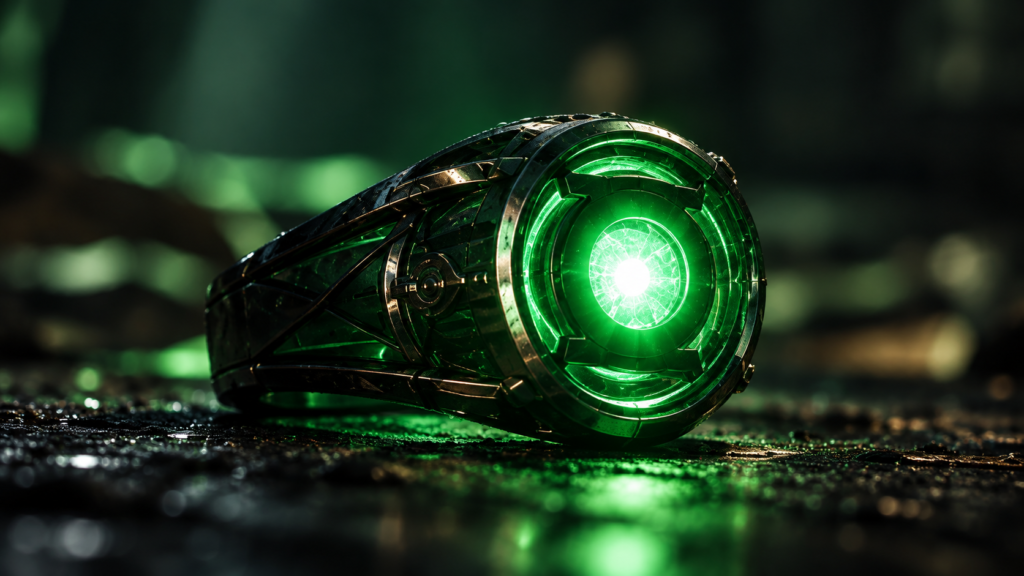
Green Lantern has always had one of DC’s larger and stranger mythologies. The Green Lantern Corps functions as an intergalactic police force, with members assigned to different sectors of the universe. Their power rings turn willpower into energy constructs, while the wider mythology includes the Guardians, Sinestro, the emotional spectrum and countless alien civilizations.
A weaker adaptation could easily drown in all of that.
Lanterns goes in the opposite direction.
Season 1 begins with a murder investigation in the small town of Rushville. John and Hal talk to residents, follow clues, question motives and slowly realize that the case is connected to something much larger. Early episodes can feel more like a prestige crime series than a superhero show, and that grounded approach makes the bigger DC elements more effective when they finally arrive.
The show never abandons the source material. Hal Jordan, John Stewart, Guy Gardner, Sinestro and the Guardians all matter, but the series does not rush to explain every piece of Green Lantern lore at once. The mythology is introduced as the story needs it.
That is probably the smartest choice the writers made.
Viewers who know Green Lantern can enjoy the references and see where the universe might expand next. Viewers who do not know the comics can simply follow the murder mystery without feeling lost.
The source material gives the show scale, but the writers resist the temptation to show all of that scale immediately. That restraint makes the world feel bigger rather than smaller.

2. Kyle Chandler and Aaron Pierre Lead a Cast With Almost No Weak Link
Superhero shows can survive uneven effects or even a familiar plot if the characters work. Lanterns understands that.
Kyle Chandler’s Hal Jordan and Aaron Pierre’s John Stewart are the center of the series, and their dynamic is easily one of its strongest elements. Hal is experienced, worn down and increasingly difficult to read. John is newer to this world, more skeptical and far less willing to accept everything his mentor tells him.
Their relationship is not smooth.
They argue, distrust each other and approach the job differently. At times they feel like mentor and student. At others they feel like two detectives who would probably prefer to work alone. As the season goes on, that friction becomes one of the show’s most important emotional threads.
The finale makes clear just how central that relationship was. Mundy later said the season was fundamentally “about these two guys,” and that landing the emotional story between them was more important than ending with the biggest possible superhero battle. DC
That choice works because Chandler and Pierre sell the relationship.
But the supporting cast matters just as much. Kelly Macdonald, Garret Dillahunt, Poorna Jagannathan, Jason Ritter and Ulrich Thomsen all play characters with their own motives, secrets and emotional weight. The people of Rushville never feel like they exist only to hand the detectives another clue.
That matters in a mystery.
If every side character feels thin, the audience immediately knows who is important. Lanterns does a much better job of giving different characters enough personality and history to keep suspicion moving.
Rotten Tomatoes’ critics consensus specifically highlights Chandler and Pierre’s performances, grounded writing and chemistry as major strengths of the season. I would go slightly further: the leads are excellent, but the show would not work nearly as well without the actors around them. Rotten Tomatoes
3. The Story Rarely Goes Where You Expect
This was probably my favorite part of the season.
At first, Lanterns looks like a fairly straightforward investigation. John and Hal have a case, there are suspects, and each episode seems likely to move them one step closer to the answer.
Then the story keeps changing shape.
A problem that appears close to being solved leads into something else. Characters who seem important for one reason turn out to matter for another. Information that feels almost incidental early in the season becomes much more important later.
I genuinely think that if you turned the season into a “guess what happens next” game, most viewers would lose.
The important part is that the twists usually do not feel random. The show plants enough information early on that later developments often make more sense in retrospect. By the finale, several scenes and character choices from earlier episodes suddenly carry more weight.
That is one reason the final episode has been so well received. Episode 8 currently holds a 100% Tomatometer score, and several critics praised the finale for completing a full story rather than functioning only as setup for another season. One review described it as an excellent John Stewart origin story, while another praised the show for actually “sticking the landing.” Rotten Tomatoes
What I liked most is that the finale does not simply decide that bigger action equals a better ending.
The series ultimately comes back to John and Hal.
Mundy said that if the creators could land the emotional story between those two characters, they would feel they had done their job. That explains why the ending works as well as it does. Even when the mythology expands, the show does not forget the relationship that carried the season in the first place. DC
It also leaves plenty of room for another season without making Season 1 feel incomplete.
That is harder than it sounds.
So, Is Lanterns Worth Watching?
For me, yes. Easily.
You do not need to know much about Green Lantern or the wider DC Universe before starting. The show gives you enough information as it goes, and the first season is built around a mystery simple enough to follow even if names like the Guardians or Sinestro mean nothing to you.
Just do not expect eight episodes of giant energy constructs and cosmic battles.
Lanterns spends much more time on people, secrets, investigation and the relationship between its two leads. That may disappoint viewers looking for nonstop superhero action, and the audience score on Rotten Tomatoes is noticeably lower than the critics’ score. But for me, the slower and more grounded approach is exactly what makes the series stand out. Rotten Tomatoes
By the time the final episode ended, I was not thinking about whether the show had enough action. I was thinking about where these characters could possibly go next.
And that is probably the best compliment I can give Season 1.
A strong mythology, a cast that rarely misses, and a story that keeps refusing to take the obvious route made Lanterns one of the more satisfying superhero shows I’ve watched recently.
Now I just want Season 2 sooner rather than later.