
The Next AI Bubble May Be a Credit Bubble
Wall Street’s latest move into AI infrastructure is being described as another massive bet on artificial intelligence. I think that interpretation misses the more important shift.
Wall Street is not simply betting that AI will succeed. It is beginning to financialize AI infrastructure — and that changes the nature of the AI boom.
For the past several years, AI has largely been an equity story. Investors asked which chip company would dominate, which model would win, and which AI application would eventually capture users and profits.
Now the questions are changing.
Can a GPU cluster generate enough cash to service debt? How high will utilization remain? How long are customer contracts? What will the hardware be worth three years from now? How quickly can the original investment be recovered?
These are not technology questions. They are credit questions.
AI Is Moving From Equity to Debt
This is why the recent NVIDIA financing initiative matters. The headline number is enormous, but the structure matters more than the amount.
Financial institutions are not simply writing one giant check for AI. They are building financing structures in which individual AI infrastructure projects can be evaluated, financed and potentially distributed to institutional investors.
In other words, GPU infrastructure is beginning to behave less like experimental technology and more like a financeable asset.
That could dramatically expand the amount of capital available to AI. Venture capital is limited, and even Big Tech balance sheets have limits. Pension funds, insurers, infrastructure funds and private-credit markets represent a much larger pool of capital.
If AI data centers can be packaged into assets with predictable cash flows, the investment cycle can continue far beyond the balance sheets of technology companies.
That is the bullish interpretation. But it also introduces a different kind of risk.
The Risk Is No Longer Just AI Demand
The traditional AI-bubble question is simple: what if AI demand disappoints?
Once leverage enters the system, however, that is no longer the only question that matters.
The more important question becomes:
What happens if the cash flows arrive more slowly than the debt?
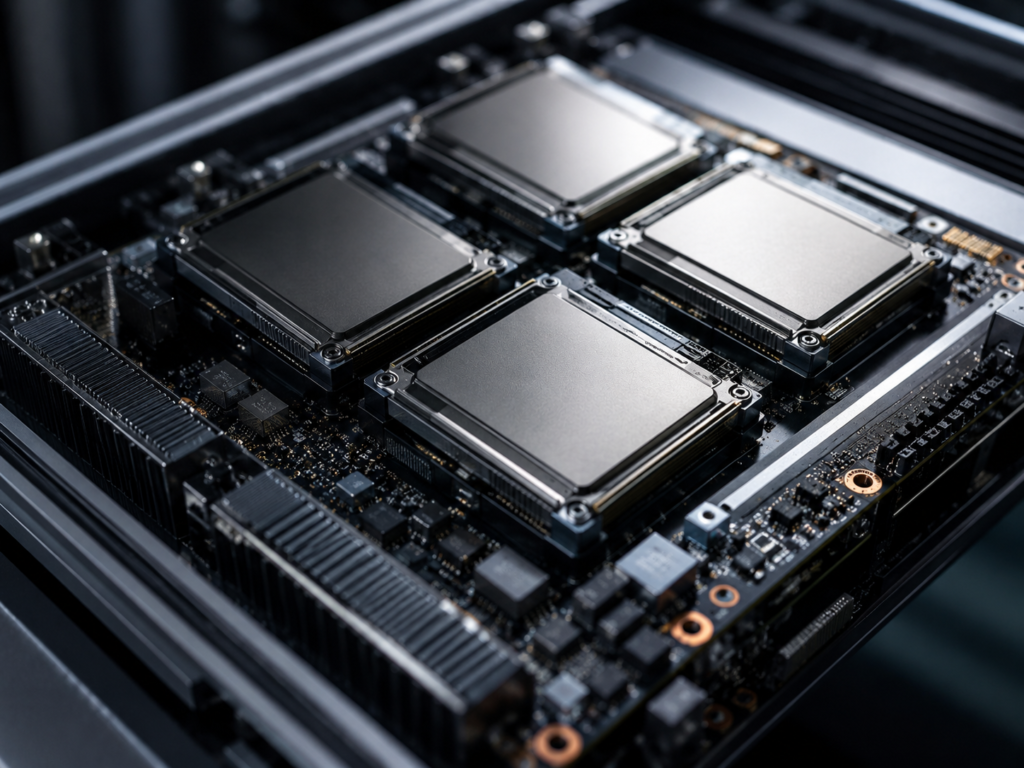
AI infrastructure is particularly exposed to this mismatch. Data centers may be financed over many years, while GPU economics can change much faster. New chips improve performance, inference costs fall, older hardware loses value and customers can shift toward cheaper architectures.
So the crucial metric is not whether a GPU still works five years later. It is whether the asset can generate enough cash before its economic value declines.
That makes payback period one of the most important metrics in the next phase of the AI cycle.
If infrastructure recovers its cost in a year, rapid technological depreciation may be manageable. If the payback period stretches to three, four or five years, the same financing structure becomes much more fragile.
This Is Where an AI Boom Could Become a Credit Bubble
Financialization itself is not a problem. Almost every major infrastructure boom eventually requires debt markets. Railroads did. Telecom networks did. Energy infrastructure did. AI will too.
The risk begins when abundant capital starts changing underwriting behavior.
At first, lenders finance the strongest assets: high utilization, strong counterparties, long-term contracts and conservative residual values. But if investor demand for AI credit becomes large enough, the market will eventually need more assets to absorb that capital.
That is when standards can weaken.
Lower-quality customers may receive financing. Utilization assumptions may become more aggressive. Residual GPU values may be estimated more optimistically. Debt structures may become more leveraged.
At that point, the market is no longer simply financing AI demand.
It is beginning to finance the assumption that AI demand will continue indefinitely.
That distinction is critical.
The Signal Investors Should Watch
This suggests that the clearest warning sign of an AI bubble may not come from ChatGPT usage, model benchmarks or GPU shipment numbers.
It may come from the credit market.
Watch financing terms, loan-to-value ratios, customer quality, contract duration and assumptions about GPU residual value. Above all, watch whether payback periods are getting longer while leverage is increasing.
If that starts happening, the AI bubble will have changed form.
It will no longer be only a technology valuation bubble.
It will be becoming a credit bubble built on compute.
That, in my view, is the real significance of Wall Street’s entrance into AI infrastructure.
The first phase of the AI boom was financed by belief in technology. The next phase may be financed by belief in cash flow.
And history suggests that the second belief deserves just as much scrutiny as the first.